
[No. 067]
Art
Flow & Framework: How I Bridge Art & Design
Whenever I speak to my peers, most of them view the art process as a “go with the flow” or “follow your heart” type activity. Both are true, and I know this because that’s exactly how I was doing it for most of my teenage years. But in university, design made me realise something else: functional ways to shorten creative process from ideation to execution. In ways that AI can’t quite replicate… yet. Maybe.
Over 4 years of Inktober, these are 4 design practices I’ve carried into my art (excluding design principles):
1. A systemic approach (use a recipe, then follow through)
Let’s point out the elephant in the room before anything: having a subject. Duh. Having a specific subject helps keep visuals relevant and it’s pretty straightforward. Here’s how it goes:
Create an interesting subject, visualise the approach (moodboard) and set goals (list-making, keeps you accountable)
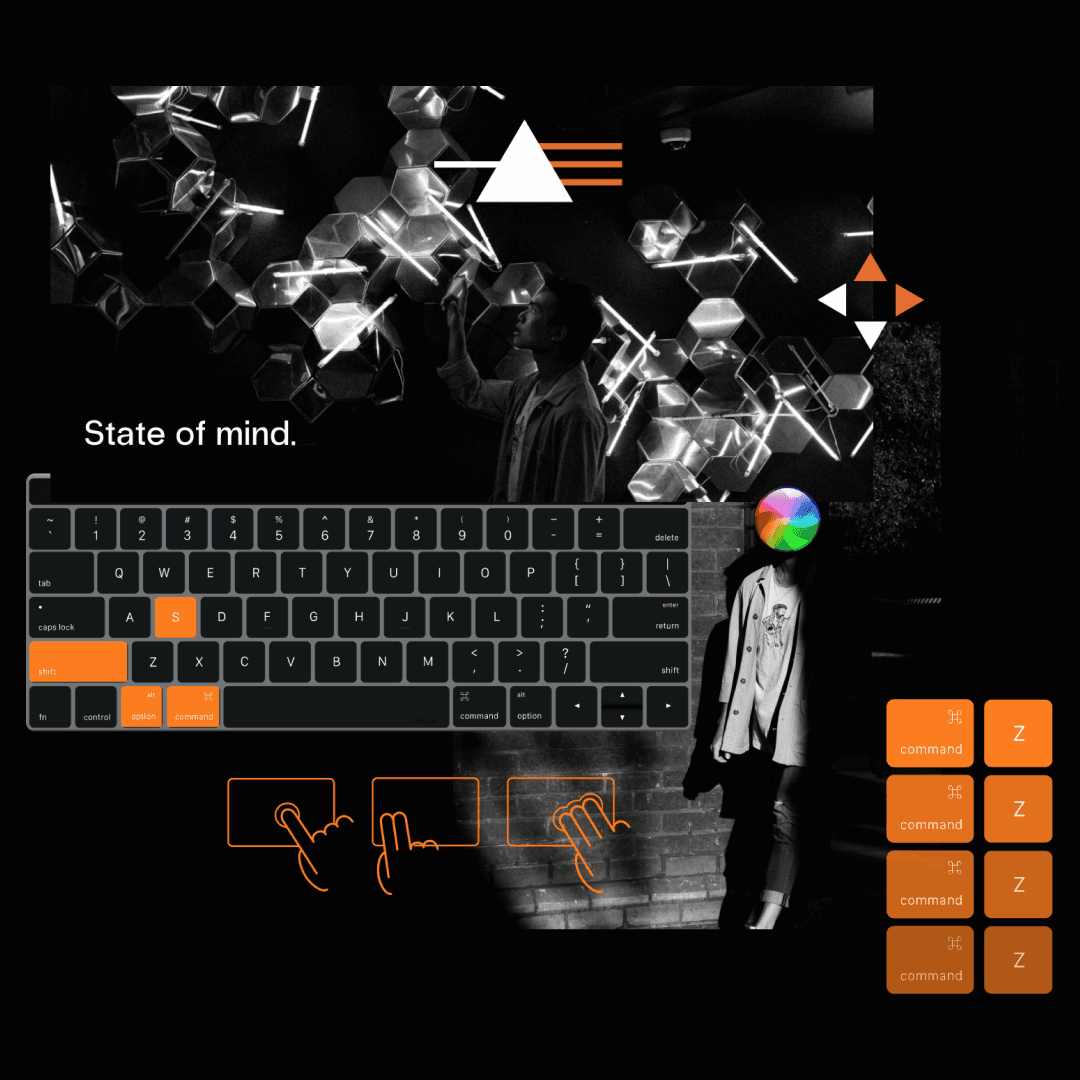
Fun design experiment from Nov 2021, more on my IG @linusyam_
I’m keeping things on a surface-level, but that’s really the essence of it. It sounds obvious but creating a to-do-list changes everything, make it fun and make it challenging. That way, you allow your subconscious mind to conjure concepts in the back of your mind when you’re aware of what the subject of interest is. For example, all I drew were my favourite anime characters for Animetober. This year I’m stepping it up a little to challenge myself in a thematic way.
2. Creative constraints (set a standard)
Pure creativity is absolute havoc and as such, needs to be leashed with (some) rules for coherence. This is where design becomes really useful, because it keeps the overall vibe in check by making sure that certain things are kept consistent. It’s that feeling that one visual is related to another in specific ad campaigns and they usually come in the form of art direction, layouts, colours and/or themes.
Inktober’s constraint is ink, but I bent it. That’s because finding “my style” is more important to me and that doesn’t happen when you stick to conventions.
3. Real world applications (can it be real?)
Before I begin, I ask myself a lot of questions about the process.
How can I do it?
What do I need to use?
Where can I find inspiration?
These are all process-driven questions and I used to stop there. Nowadays, I find it important to ask about the delivery too, because how it’s delivered is just as important as how it’s created. If not, more.
How will it be used?
Where will it be seen?
Why do people need it?
I’ve realised that it adds to professionalism and perspective to client conversations, because it shows that you’re able to take a step back to look at the big picture while planning ahead. This builds assurance in your work and trust in the outcome, both of which are incredibly valuable.
4. Iterative improvements (keep on keeping on)
Things get better the more you spend time on it. Remember how I said “websites aren’t a once and done kind of thing”? I meant, anything worth pursuing shouldn’t be a once and done kind of thing. There, I fixed it.
In my case, I’ve been revisiting my past works and reflecting on how I can improve it. Because I know a lot more about myself and my process now than ever before. Something I’ve picked up is that the improvement doesn’t always have to come from the output (which is what I used to obsess most about), it could also be an adjustment within personal workflows. For example, restructuring files or layers, documenting the process, attempting new styles, broadening the framework, etc.
While this post is about the dynamics between art and design, but I find this philosophy true for most things in life too. Health. Wealth. Relationships. Writing. Business. Projects. It’s all connected somehow, and I believe that all it takes is a small change to create the biggest impacts that will ripple from one aspect of your life to another.