
[No. 098]
Design
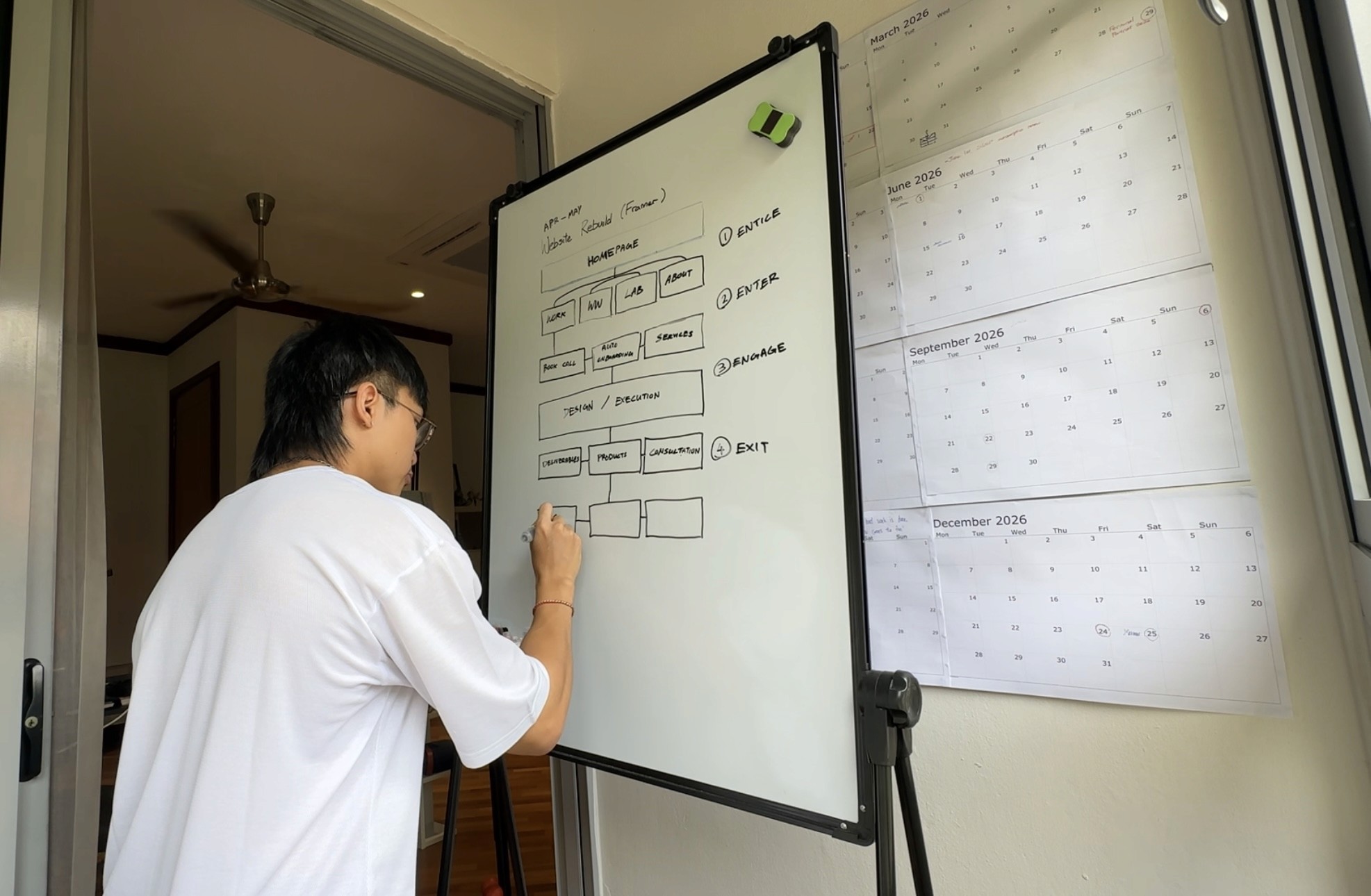
My Squarespace plan expires this June
So it’s time for an upgrade.
This time, I’m officially building it on Framer.
Truth be told, I’ve been practicing it on the side during my free time for a few months now. It’s been a solution that I’ve been telling my clients about, and what better way to prove your services than to use it yourself?
That said, I’ve actually been building it for a few weekends now – v0.5 is already up. It’s an ugly draft, but it’s useful to start somewhere and I thought it would be valuable to share my process along the way.
Here are 5 things I’ve realised about building my new Framer website in 2026:
1. Website builders are “same same, but different”
When you’re using a new platform, it’s mostly the UI and new terminologies that trip you up. But if you’ve built a few websites on different platforms, you’ll understand the fundamentals and notice patterns. Breakpoints, sections, overflow, positions, margin, etc. They’re all recyclable knowledge across platforms just branded differently.
If you’re new to web development and are wondering about the options out there, you’ll find this useful. No matter which website builder you choose, someone’s going to have to build it. It could be you, it could be an employee, but I promise you things will be a lot easier if you’ve been…
2. Cultivating a brand identity
It doesn’t matter if you build the best-looking website in the world. If you’re confused about what you/your business stand for, people will feel disconnected. A thoughtful logo and beautiful images may help, but it’s through business values, personal stories and work cultures that shape the overall visual language, design structure and brand tone.
With the above, it becomes an absolute force multiplier which helps speed up processes by reducing guesswork when building your website. I’ve found that most people get so obsessed with first-time perfection, that they underestimate the power of cultivation. Just make it exist first, then make it better later.
3. Wanna save time? Organise your assets
It doesn’t matter what your business is about because if you’re going digital, you can’t run away from these 3 things: copy, images and videos. Code aside, these are the building blocks of a memorable website which is why having a system to keep it safe and tidy is extremely important.
However, most people skip this because it’s boring. But when you know exactly what you need and where it is, you save time. A lot of time. Especially if you’re building something that lasts.
On a personal level, organising my files is something I’m really glad I’ve been persistent about because now that I’m migrating all my digital assets, it’s been incredibly helpful to know that everything has been labelled and packaged beforehand. It has easily halved my working hours.
4. You don’t have to build from scratch
The best creatives don’t build from scratch. They make use of existing assets then add a unique twist to it.
It’s just like Picasso said: steal like an artist.
In web development, this could be utilising proven templates or using community-built components. It’s really useful to know how to build a website from scratch, but if your main priority is speed and quality, you’ll be surprised by how effective this method works. The tricky thing is knowing how to make it yours.
5. AI is useful, but it’s not a genie.
There’s a lot of hype about how different AIs can fully code a website with a single prompt but that’s just misinformation. While it’s never been easier to build custom sections with the help of AI, you still need to put in the work by knowing your business, building your funnel, providing visual references, etc.
That said, Claude has been extremely helpful on that front. I use it on the daily with my clients’ work and personal projects. It makes mistakes, but its output is unmatched, especially when it’s coding.